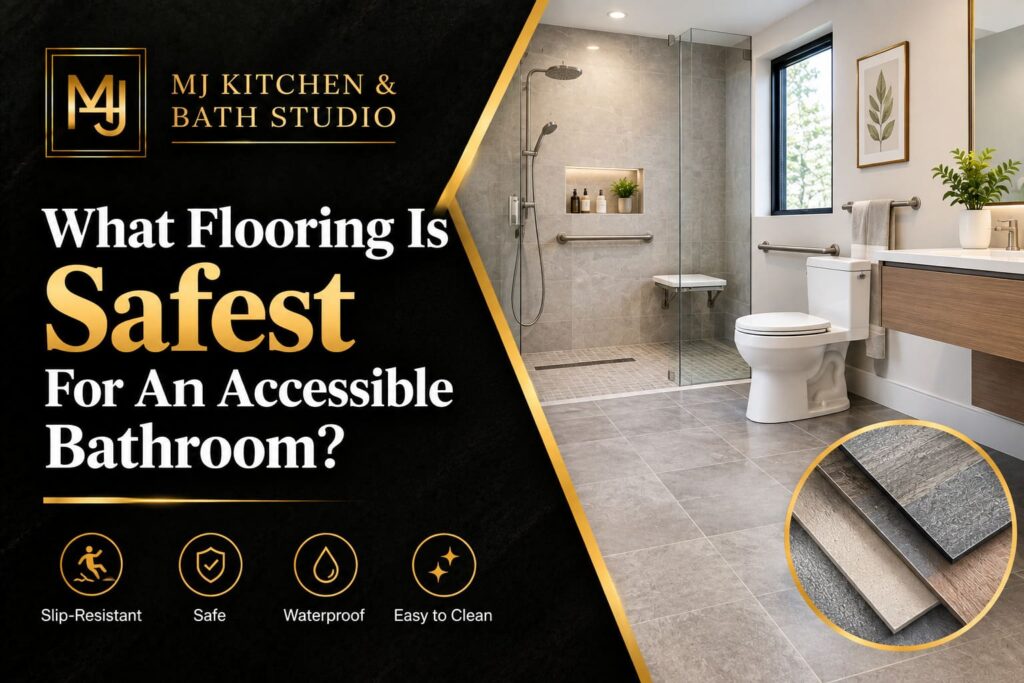
Planning an accessible bathroom requires more planning compared to custom and luxury bathrooms. In accessible bathrooms, the floor needs to help create a space that is safe, comfortable, waterproof, and easy to move through.
So Which Flooring Is Safest For an Accessible Bathroom?
Slip-resistant porcelain tile, textured luxury vinyl flooring, and safety-grade sheet vinyl flooring are considered some of the best flooring for bathrooms. The safest flooring type can vary depending on factors such as bathroom layout, mobility needs, and bathroom renovation goals.
Table of Contents:
- What is the Safest Bathroom Flooring?
- Why Does the Floor Matter in an Accessible Bathroom?
- What Makes Bathroom Flooring Safe?
- Best Bathroom Flooring Ideas for an Accessible Bathroom
- How to Choose the Right Flooring for Your Accessible Bathroom?
- How Much Does Accessible Bathroom Flooring Cost?
- Best Flooring For Aging-In-Place Bathrooms?
- Flooring Mistakes to Avoid in Accessible Bathrooms
- Why Hire a Bathroom Renovation Contractor for Accessible Flooring Installation?
- Planning an Accessible Bathroom Renovation?
What is the Safest Bathroom Flooring?
| Flooring | Water resistant | Wet surface safety | Best For |
| Textured porcelain tile | Excellent | Excellent when properly specified | Long-lasting accessible bathrooms. |
| Textured luxury vinyl | Excellent | Good to excellent depending on product | Aging-in-place bathrooms |
| Sheet vinyl | Excellent | Good when safety rated | Seamless, easy-clean bathrooms |
| Small-format tile | Excellent | Good to excellent | Curbless/roll-in showers |
| Polished marble | Variable | Poor when wet | Generally not recommended for accessible bathrooms |
Why Does the Floor Matter in an Accessible Bathroom?
As bathrooms are exposed to frequent moisture, water, and humidity, which can increase the risk of falls, that is why bathroom flooring plays an important role in creating a safe and comfortable accessible bathroom.
Bathroom flooring can help to create a safer environment by providing:
- Better traction in wet areas
- Improved water management
- Easier maintenance
- A safer and more level surface
- Better long-term comfort
What Makes Bathroom Flooring Safe?
Provide traction when wet: A bathroom involves water, humidity, and soap. A floor that feels safe when dry may become slippery after use. That’s why matte or appropriately textured non-slip bathroom flooring is preferred for accessible bathrooms.
Water-resistant: Water can easily reach the floor through shower spray, wet feet, spills, and plumbing issues. That’s why a floor that can handle regular exposure to moisture is generally a better choice.
Stay level and minimize hazards: An accessible bathroom is not just about the surface of the floor; sometimes a raised threshold or poorly planned shower curb can also create a problem. That is why accessible bathroom renovations often involve more than simply replacing the existing tile.
Be easy to clean: Dirt and soap residue can affect the look of the bathroom, so they need to be cleaned regularly. A practical bathroom should be easy to maintain and should not require excessive scrubbing or complicated care.
Work with the entire bathroom design: Remember that the flooring should not compromise the overall look of the bathroom. It must work well with:
- A curbless or low-threshold shower
- Adequate drainage
- Shower seating
- Comfortable turning space
- Appropriate doorway clearance
- Good lighting
- Easy-to-reach fixtures
- Safe transitions between rooms
Waterproof bathroom flooring for wet areas: Unlike other areas of the home, bathrooms are exposed to more moisture. That’s why waterproof bathroom flooring can be considered a practical choice for the areas around showers, tubs, and vanities.
Best Bathroom Flooring Ideas for an Accessible Bathroom
Textured porcelain tile
Because of their durability, versatility, and moisture-resistant properties, porcelain tiles are one of the most popular bathroom flooring choices. Although a polished porcelain floor can look luxurious, an appropriately textured porcelain tile can provide a more practical surface for wet areas.
Pros of Porcelain Tile:
- Durable
- Excellent moisture resistance
- Available in different styles
- Works great with floor heating
- Suitable for long-term bathroom renovations
Textured luxury vinyl flooring
Many homeowners are investing in textured luxury vinyl flooring because of the warmer and softer feel that they provide. They are available in wood, stone, and tile-inspired designs. The variety of available designs can help to create a more attractive bathroom flooring without compromising safety.
Pros of luxury vinyl
- Warmer than porcelain or ceramic
- Easy to clean
- Available in many designs
Sheet vinyl
It is perfect for homeowners who want to minimize seams. Because it creates fewer joints, it can be useful in the bathrooms where water management is a major consideration.
Pros of sheet vinyl flooring:
- Seamless and smooth appearance
- Comfortable and easy-to-clean surface
Small-format tile for a curbless shower
Small-format or mosaic tile can be useful for curbless or roll-in showers. Multiple grout joints help to provide the textured surface and allow the floor to follow the slope towards the drain.
Pros of small-format tile
- Helps to create safer shower areas
- Work well with shower slopes
- Available in different designs and patterns
Note: While selecting a flooring material, rather than focusing on colour, consider wet traction, level surfaces, water resistance, easy maintenance, and safe transitions
How to Choose the Right Flooring for Your Accessible Bathroom?
If you are considering flooring for your accessible bathroom in Lakeshore or other areas, don’t choose flooring based on appearance, as it may not meet the safety requirements that you need.
Before investing, consider your mobility needs, wet area safety, waterproofing requirements, and maintenance needs, and most importantly, do not ignore the overall bathroom design. These factors can help to create a safer space without compromising the layout/appearance.
Ask yourself:
- Who will use the bathroom?
- How much maintenance do you want?
- Do you need heated flooring?
- Do you want a walk-in shower or a standard shower?
- Is your bathroom designed for aging in place?
- Do you want a wheelchair-accessible bathroom?
How Much Does Accessible Bathroom Flooring Cost?
Accessible bathroom flooring can cost you somewhere between $5 and $30 per square foot for materials and installation. However, the cost can vary depending on the flooring materials, bathroom size, existing condition of the floor, waterproofing requirements, and complexity of the project.
| Flooring type | Approximate material cost | Best for |
| Luxury vinyl flooring | Low to mid range | Comfortable, warm, and easy-to-maintain bathrooms. |
| Porcelain tile | Mid- to high-range | Durable and long-lasting accessible bathrooms. |
| Small-format mosaic tile | Mid- to high-range | Curbless showers and shower floors |
| Sheet vinyl | Lower to mid-range | Seamless and easy-to-clean bathroom designs. |
If you want to know the cost of accessible bathroom remodeling, then you can read our guide on How Much Does an Accessible Bathroom Renovation Cost?
Factors that can affect the accessible bathroom flooring costs
It is considered costly because it involves additional planning, such as
- Removing the existing flooring
- Repairing uneven subfloors
- Installing a waterproofing system
- Creating a curbless shower transition
- Improving drawings
How to reduce the accessible bathroom flooring costs
- Choosing durable materials that do not require frequent replacements.
- Keeping the existing bathroom layout when possible.
- Selecting practical materials rather than premium finishes.
Best Flooring For Aging-In-Place Bathrooms?
Aging-in-place bathrooms are specially designed to provide safety and comfort to the homeowners. Flooring plays a crucial role in that, as bathrooms are high-moisture areas where several factors can create safety concerns. The best flooring for an aging-in-place bathroom is the one that provides:
- Slip-resistant flooring, as it can help to reduce the chances of falls.
- Water-resistant flooring that can handle moisture exposure without damage.
- Low-maintenance surfaces that are easy to clean.
- Safe transitions that can work well with the overall bathroom layout.
The best flooring options for aging-in-place bathrooms are
- Textured luxury vinyl flooring
- Textured porcelain tiles
- Sheet vinyl flooring
- Small-format tiles for accessible showers
However, flooring is just one part of the accessible bathroom; you should also consider curbless or low-threshold showers, shower seating, proper drainage, comfortable lighting, easy-to-reach fixtures, and adequate bathroom space.
Flooring Mistakes to Avoid in Accessible Bathrooms
Choosing polished flooring: No doubt, polished flooring looks luxurious, but it can become slippery when wet.
Ignoring installation quality: Do not think investing in the best flooring will automatically increase safety, because factors such as poor installation and waterproofing problems can create uneven areas and may damage the floor.
Focusing only on appearance: Stop assuming that the most beautiful flooring will always be the safest option.
Forgetting transitions: Apart from flooring, doorways and shower entries also need careful planning.
Why Hire a Bathroom Renovation Contractor for Accessible Flooring Installation?
Hiring a professional bathroom renovation contractor is as important as selecting the appropriate flooring design. A contractor can help you with proper floor preparation, waterproofing, drainage planning, and safe transitions and will also coordinate with other bathroom features.
A minor mistake in the renovation process can result in unexpected issues, which may increase the overall budget and timeline of the project. That is also one of the major reasons why your accessible bathroom renovation project requires a licensed and experienced contractor.
Whether you’re planning an accessible bathroom in LaSalle or somewhere else, MJ Kitchen & Bath Studio can help you in designing a safe, functional, and stylish bathroom.
FAQs
What is the safest flooring for accessible bathrooms?
Textured porcelain tile, textured luxury vinyl flooring, safety-rated sheet vinyl, and small-format tiles are considered the safest flooring for accessible bathrooms. Because they all provide good water traction, water resistance, and a level walking area.
Is luxury vinyl flooring good for an accessible bathroom?
Yes, it can be a good choice for accessible bathrooms because it provides a softer and warmer surface as compared to other available options.
What flooring should be avoided in an accessible bathroom?
Highly polished surfaces, slippery finishes, and flooring that creates uneven transitions must be avoided in accessible bathrooms.
Planning an Accessible Bathroom Renovation?
If you want to create a safe, comfortable, and easy-to-use bathroom, then you should not ignore the right flooring. Because it may help reduce the chances of risk of slips and falls. However, some factors, including waterproofing, shower design, drainage, lighting, and layout, can also affect safety.
At MJ Kitchen & Bath Studio, we have helped many homeowners by creating a functional bathroom that is specially designed around their needs, budget, and comfort. So whether you are planning walk-in showers, an aging-in-place bathroom, or complete bathroom remodels, we can help you design a space by using premium quality materials and offering quality workmanship.
Contact MJ Kitchen & Bath Studio today and discuss your renovation goals with our bathroom remodeling contractors.